
Disposable Wooden Cutlery Partnership FAQ: Acceptance, After-Sales, and Long-Term Supply
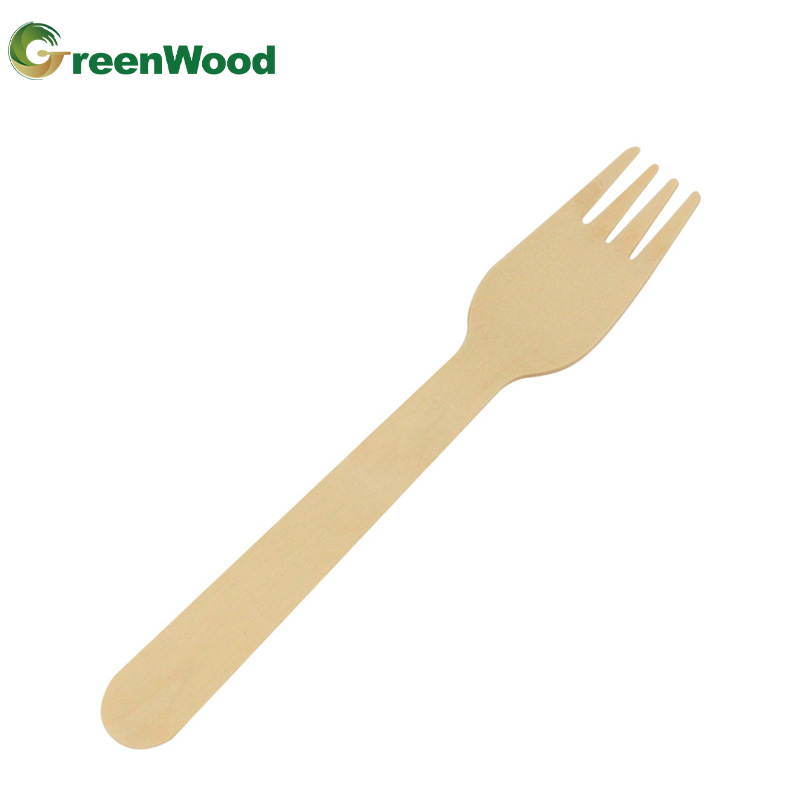
A natural wood fork from a disposable wooden cutlery range built for repeat supply programs, where the written specification - not the approved sample photo - holds quality steady.
Choosing disposable wooden cutlery takes an afternoon. Keeping the same disposable wooden cutlery supply stable for three years takes a written agreement. The first shipment is protected by a sample and a photograph; the tenth shipment is protected by a fixed specification, agreed acceptance criteria, valid certifications, and a named after-sales route.
This FAQ-style guide answers the questions buying teams actually raise during partnership discussions with a disposable wooden cutlery manufacturer: what purchasing terms should be locked, how a batch is accepted or rejected, which certifications support retail and customs clearance, what can be customized, and how long-term supply and after-sales support should be structured. The product, capacity, and certification facts below come from Greenwood - Dalian Industrial Co., Ltd., a manufacturer of disposable wooden tableware established in 2000 that exports approximately 95% of its output.
The Real Problem: A Partnership Is Judged on Repeat Orders, Not on the First One
Disposable wooden cutlery is a low-unit-value, high-volume product. That combination creates a specific risk profile. A single container can hold hundreds of thousands of pieces, produced from a natural material, packed in a format selected months earlier, and delivered to a buyer who has already promised the same product to a restaurant chain, an airline caterer, or a retail listing.
Partnership failures in this category rarely come from the material. They come from gaps that were never closed before production started:
- An unwritten specification. "Wooden fork, 160mm" is a description, not a specification. It says nothing about surface finish, tolerance, packaging, or branding, which means every future batch can be argued about rather than measured.
- Undefined acceptance criteria. If nobody agreed in advance what an acceptable edge or an acceptable natural grain variation looks like, inspection becomes opinion.
- Certification treated as a one-time document. Retailers and customs authorities ask for current, valid documentation - not a file saved from the first order.
- Packaging changed between runs. Bulk packs, individually wrapped units, and custom-printed sleeves run on different packaging lines, so a late change affects cost, timing, and unit counts per carton.
- No defined after-sales route. Without a named contact and a documented remedy, a non-conforming lot turns into a negotiation instead of a correction.
Industry Background: Volume Growth and Regulatory Pressure Moving Together
Two forces are shaping how buyers select disposable wooden cutlery partners, and both point in the same direction: toward suppliers who can document what they ship.
On volume, Dataintelo estimates the global disposable wooden cutlery market at approximately USD 2.8 billion in 2025, with a projected value of USD 5.2 billion by 2034. The same source reports that Asia Pacific led the market in 2025 with a 38.6% share, supported by urbanization and plastic restrictions in countries such as China and India. China remains the world's largest exporter of wood tableware and kitchenware under HS 4419, with export values of roughly USD 1.38 billion to USD 1.5 billion in 2024 according to OEC / WITS data. Within the category, spoons are reported as the largest product segment, at approximately 32.5% to 47.2% of market share depending on the research house.
On regulation, two rules matter most for wooden food-contact products. The EU Deforestation Regulation (Regulation (EU) 2023/1115) requires geolocation and due diligence information for wood products placed on the EU market, and the compliance deadline for large operators was postponed to 30 December 2025, with subsequent council agreements pointing to December 2026. Separately, wooden cutlery must meet EN 13432 to be marketed as "compostable" in the EU.
The practical consequence is that a supplier relationship is now partly a documentation relationship. Buyers who treat certificates, batch references, and material traceability as part of the purchase - rather than as paperwork requested after delivery - encounter far fewer interruptions at the retail and customs stage.
What a Long-Term Disposable Wooden Cutlery Partnership Actually Covers
A workable partnership agreement has six components. Each should be resolved before volume production begins, because each is expensive to change later.
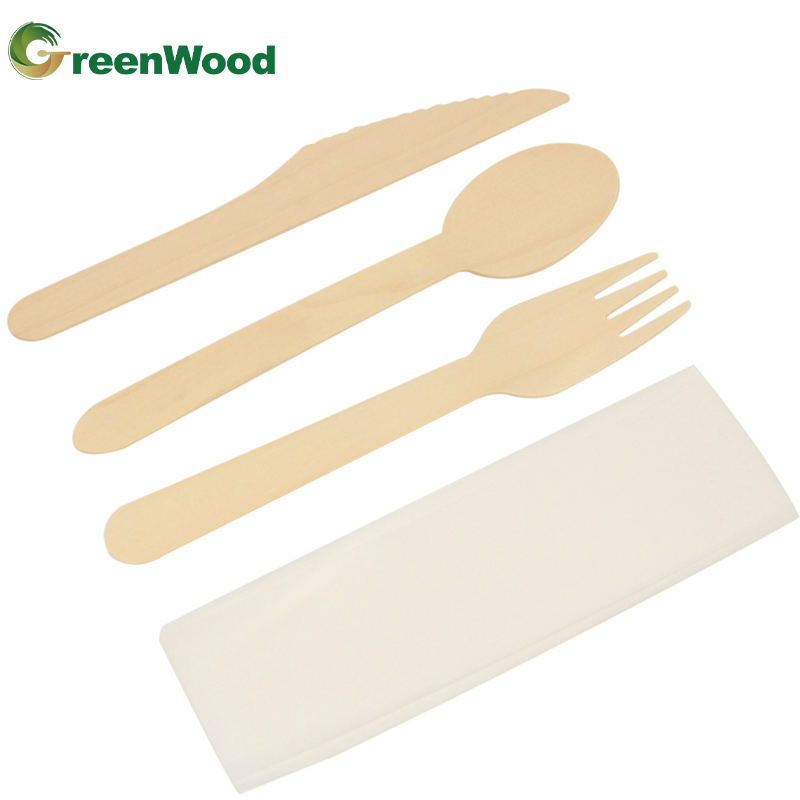
A standard disposable wooden cutlery set. Range and configuration - not price alone - determine whether a specification can be repeated order after order.
1. Purchasing Terms
The commercial section of the agreement should fix the product model, material, dimensions, surface standard, branding method, packaging format, carton configuration, and the documentation that accompanies each shipment. Naming the model explicitly removes ambiguity when a specification is revised - GW-20456 for the wooden range, GW-BC001 for bamboo cutlery, and GW-PC204 for paper cutlery are the reference points used in this article.
Purchasing terms should also state how change is handled: who approves a material substitution, how much notice a packaging change requires, and whether a brand owner or a distributor holds final approval. Private-label programs usually involve a longer approval chain, and mapping it in advance prevents a production delay at the second or third order.
2. Acceptance Criteria: What "Acceptable" Means for Wooden Cutlery
Acceptance criteria convert the specification into checks that can be performed on arrival, without a laboratory. For disposable wooden cutlery, the criteria that matter most are:
- Dimensions. Length must match the approved size. The wooden range is available in 180mm, 170mm, 160mm, 140mm, 110mm, and 95mm, with customizable sizes; bamboo cutlery uses a 170mm standard with 110mm, 140mm, and 170mm options; paper cutlery uses a 158mm standard with customizable lengths.
- Surface finish. A smooth surface, or smooth edges, with no burrs - effectively splinter-free handling at the edges and tips.
- Heat behaviour. Suitable for both hot and cold food contact.
- Food-contact safety. Food-grade, BPA-free, and non-toxic, compliant with food contact standards.
- Odour and coating. Odourless, with no paint or wax.
- Packaging integrity. Cartons intact, unit counts correct, individual wrapping undamaged where used.
- Documentation. Current certificate copies and batch references available on request.
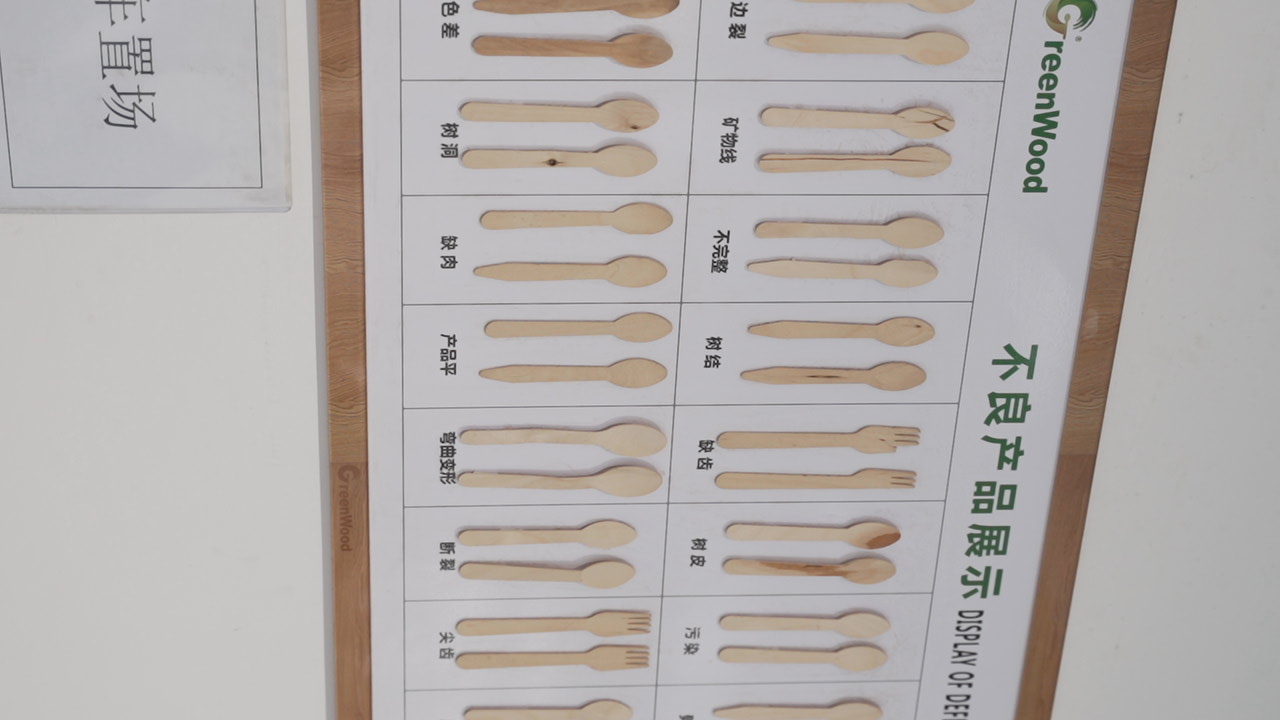
Inspection against agreed criteria before shipment is what turns "acceptance" into a repeatable process rather than a discussion after the container arrives.
Because wood is a natural material, acceptance criteria should also define which natural variation is acceptable - grain pattern, tone variation within a carton, and minor dimensional variation between production runs. Buyers who write this into the agreement avoid rejecting a batch that is technically compliant but visually different from the approved reference sample.
3. Certifications That Support Repeat Orders
Certification is what allows a wooden cutlery order to move through customs, retail onboarding, and corporate procurement without stopping. The table below separates the standards and programmes that appear most often in buyer checklists and shows which are verified for Greenwood.
| Standard / Programme | What it covers | Why it matters for repeat orders | Verified for Greenwood |
|---|---|---|---|
| ISO 9001 | Quality management system | Process and documentation consistency across production runs | Yes - listed in company certification record |
| BRCGS (BRC) | Food safety and quality management for food-contact supply chains | Retailer onboarding, hygiene, and packing control | Yes - listed in company certification record |
| FSC | Responsible forest sourcing | Traceability of wood inputs; supports retailer and EUDR due diligence | Yes - listed in company certification record |
| FDA 21 CFR 178 | US regulation covering wood and other food-contact substances | Market access for US-facing food-contact wood products | Yes - listed in company certification record |
| LFGB | German food-contact material requirements | Market access for EU and German food-contact products | Yes - listed in company certification record |
| BSCI | Social compliance auditing | Buyer and brand social responsibility requirements | Yes - listed in company certification record |
| ISO 14001 | Environmental management system | Environmental reporting and supplier scorecards | Confirm directly with the supplier |
| ISO 45001 | Occupational health and safety management | Workplace safety audit requirements | Confirm directly with the supplier |
| SEDEX | Social compliance data platform | Shared audit data between supplier and buyer | Confirm directly with the supplier |
Two practical notes. First, FDA 21 CFR 178 is the specific reference that covers wood as a food-contact material in the United States, so a US-facing buyer should expect that citation rather than a generic "FDA approved" statement. Second, compostability is market-specific: EN 13432 governs "compostable" claims in the EU, while North America uses separate third-party programmes such as BPI. Buyers sourcing for a market that claims "home compostable" should confirm which standard the certificate actually references, because industrial and home compostability are not the same claim.
4. Customization: Size, Logo, Packaging, and Color
Customization in disposable wooden cutlery runs across four variables, and all four affect production planning. They are not available identically across materials:
- Size. Wooden cutlery is available in 180mm, 170mm, 160mm, 140mm, 110mm, and 95mm, with customizable sizes. Bamboo cutlery uses a 170mm standard with 110mm, 140mm, and 170mm options, and paper cutlery uses a 158mm standard with customizable lengths.
- Logo. Wooden items use laser or print application; bamboo items use hot stamping.
- Packaging. Bulk and individually wrapped formats are both available, alongside customized printing and individual packaging for private-label programmes.
- Color. Color customization is offered on the bamboo and paper ranges; wooden items are supplied as natural wood.
Individually wrapped disposable wooden cutlery deserves a separate decision point. Switching between bulk and individually wrapped formats changes the packaging line, the unit count per carton, and the labelling, so the format should be fixed before the first production run rather than introduced mid-programme.
5. After-Sales: What Support Should Cover
After-sales support for disposable wooden cutlery is mostly about speed and evidence rather than repair. A partnership agreement should name the contact, define the response route, and state the remedy. Five items are worth writing down:
- A named commercial contact with a direct channel. Greenwood's published contact is Irene Wang, ireenwang@caregreenwood.com, telephone and WhatsApp 008613840907153.
- Retained reference samples from the approved production run, held by both sides.
- Batch traceability, so a specific carton can be traced back to a production window.
- A stated remedy for non-conforming lots - replacement, credit, or rework - with responsibility assigned in advance.
- Updated documentation whenever a certificate is renewed or revised.
Buyers should also clarify what after-sales does not cover: variation that falls inside the agreed natural-variation range, damage caused by downstream storage conditions, and packaging changes requested after production has already started.
6. Long-Term Supply: Capacity, Warehousing, and Market Coverage
Supply continuity depends on production scale and logistics reach. Greenwood operates 5 major factories with a workforce of approximately 500 staff and an annual production capacity of 6 billion pieces, supported by an R&D team of 9 engineers. The company manages the entire industrial chain from raw wood procurement through production processing to finished product packaging, and operates warehouses in Bangladesh, Ukraine, and the United States.
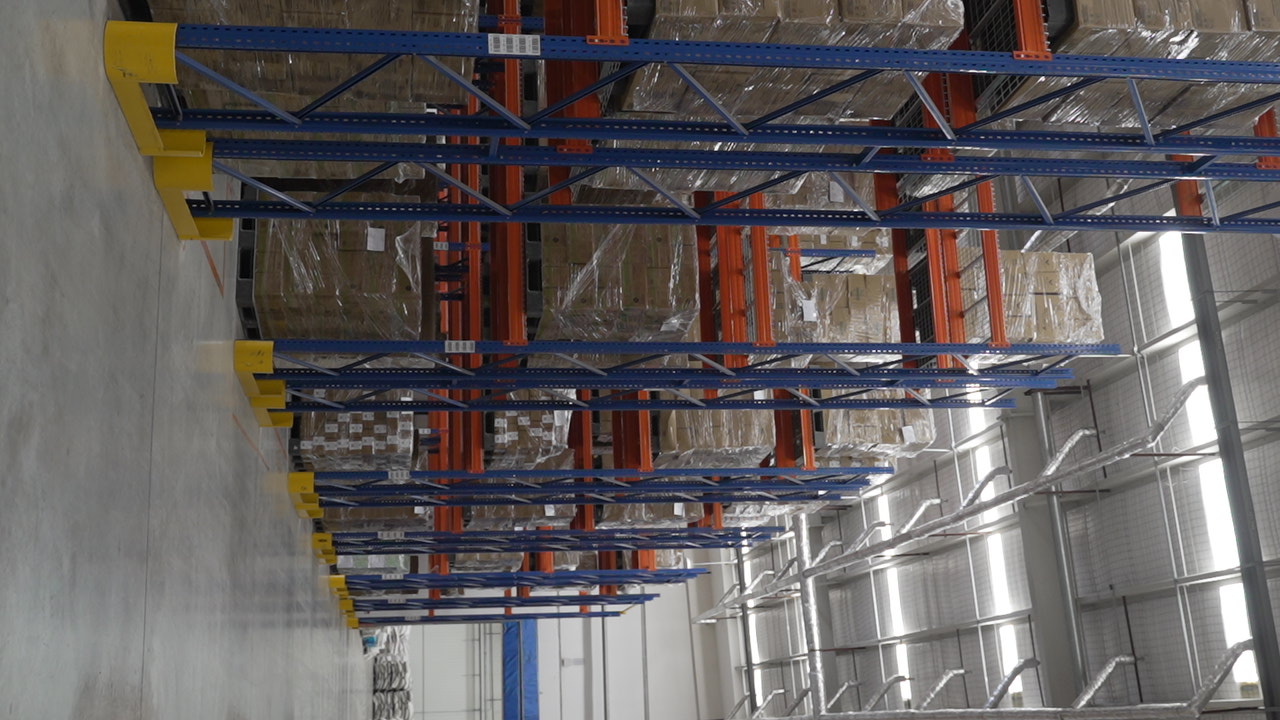
Warehousing capacity supports the part of a partnership that buyers cannot see in a sample: continuity when volumes rise or when a market shift changes the delivery destination.
Approximately 95% of production is exported, with major markets in Europe, ANZ, Canada, the USA, South America, the Middle East, Japan & Korea, and Southeast Asia. For a buyer planning a two- or three-year programme, that combination - owned upstream steps, multiple plants, and overseas warehousing - is what makes volume changes and seasonal peaks manageable rather than disruptive.
Step-by-Step Breakdown: From First Inquiry to Repeat Order
The same sequence works for a restaurant chain, a takeaway wholesaler, a supermarket own-brand, or an airline caterer. What changes is the volume, not the order of operations.
- Define the specification in writing. Model, material, length, surface standard, packaging format, branding method, and carton configuration.
- Validate with samples. Test the exact lengths and pack format you intend to buy, with the food the cutlery will actually contact - hot and cold. Check surface finish and edge quality on arrival.
- Confirm certification and documentation. Request current certificate copies and verify that each one covers the specific product and the target market, including EUDR due diligence requirements where wood products enter the EU.
- Agree acceptance criteria and inspection method. Turn the specification into an arrival checklist, including the natural-variation range that is acceptable in wood.
- Lock packaging and branding. Approve artwork, wrapping format, and carton labelling before the first run, since these drive both cost and line setup.
- Plan supply continuity. Agree expected volumes, seasonal peaks, and the role of warehousing in holding buffer stock across markets.
- Review after every delivery. Keep reference samples, log batch references, and use each delivery as a check on whether the agreed criteria are still being met.
Use Cases: Where Partner-Supplied Wooden Cutlery Fits
Disposable wooden cutlery is a single-use, manually handled, ready-to-use product, operating under ambient temperature food contact conditions. It is designed for indoor and outdoor environments including restaurants, takeaway services, picnics, banquets, and exhibitions, and it is typically paired with food containers, takeaway boxes, packaging trays, and catering trays.
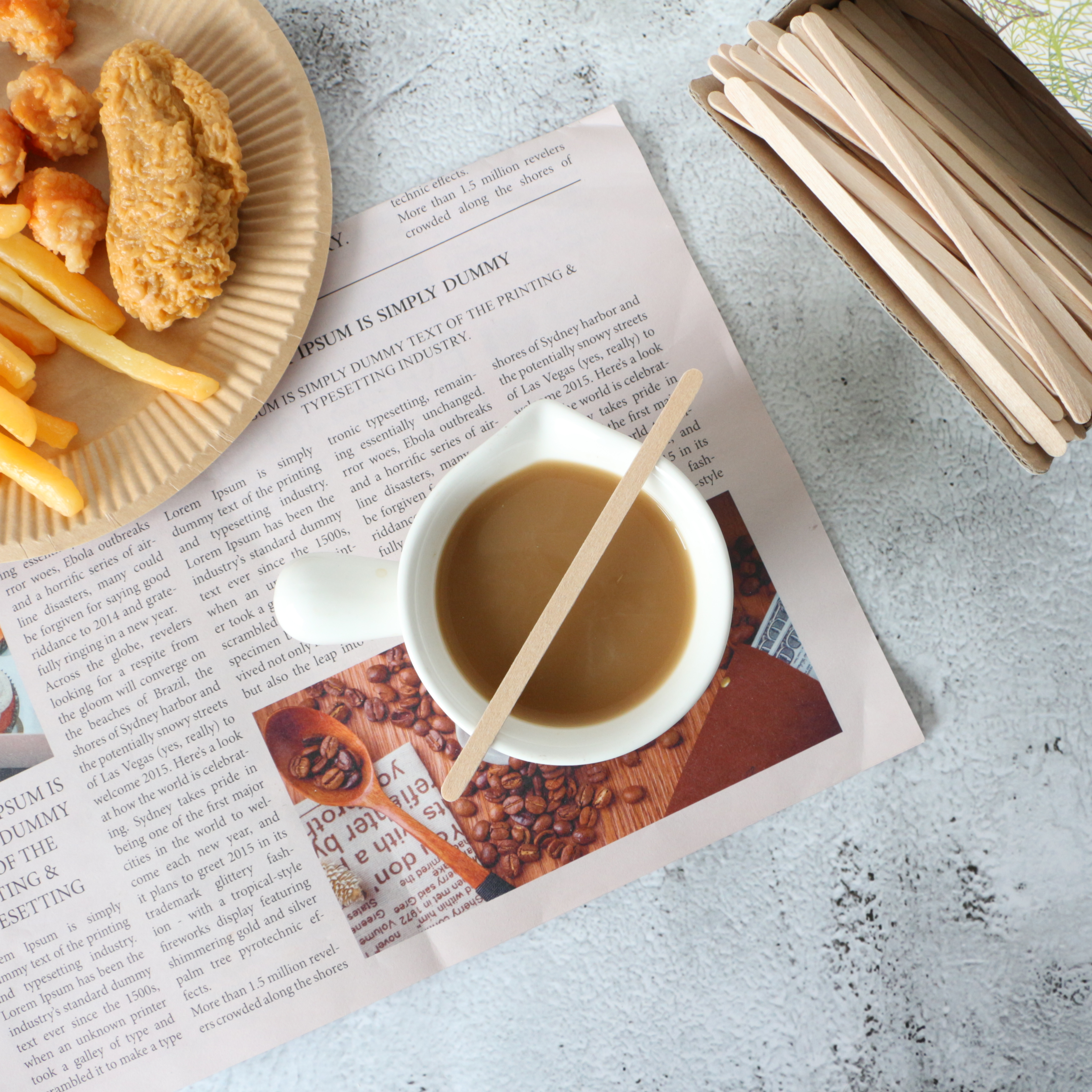
Cafes, restaurants, and takeaway operators use the same product family in different pack formats - which is why configuration should be agreed per channel, not per supplier.
- Restaurant chains. Dine-in and takeaway service where a consistent specification matters across multiple sites. Spoons are the largest single product segment in the category, which makes them a useful anchor item when negotiating a multi-item programme.
- Takeaway and delivery. Hot and cold dishes in the same bag make heat resistance and surface smoothness the two criteria that generate the most customer comments.
- Airlines and catering. Individually wrapped sets and tightly specified pack formats, where unit weight and carton configuration affect loading.
- Banquets, exhibitions, and outdoor events. High-volume, short-duration demand that depends on the supplier holding buffer stock.
- Hotels and hospitality. Room service, breakfast service, and event catering, often under a single brand across many outlets.
- Cafes and coffee service. Coffee stirrers and small-format items supplied alongside food-service cutlery.
- Wholesale and distribution. Bulk disposable wooden cutlery for restaurants, sold through distributors who need stable carton counts and repeatable labelling.
Comparison Table: Wooden, Bamboo, and Paper Disposable Cutlery
Most long-term programmes mix materials. The comparison below covers the three product families Greenwood supplies, using the published specifications for each model.
| Attribute | GW-20456 Wooden | GW-BC001 Bamboo | GW-PC204 Paper |
|---|---|---|---|
| Material | Natural wood | Sustainable bamboo | Paper |
| Items in range | Knives, forks, spoons, ice cream sticks, coffee stirrers | Knives, forks, spoons, coffee stirrers, skewer sticks | Knives, forks, spoons |
| Length options | 180mm, 170mm, 160mm, 140mm, 110mm, 95mm; customizable | 170mm standard; 110mm, 140mm, 170mm options | 158mm standard; customizable size |
| Food-contact safety | Food-grade, BPA-free, non-toxic | Food-grade, BPA-free, non-toxic; LFGB / FDA certified | Food-grade, BPA-free, non-toxic |
| Heat and moisture | Heat-resistant; suitable for hot and cold food | Heat-resistant; suitable for hot and cold food, durable for takeaway and catering | Heat-resistant, waterproof, oil-proof |
| Surface | Smooth surface, no burrs | Smooth edge, no burrs, natural bamboo texture | Smooth edge, no smell |
| End of life | 100% biodegradable and compostable | 100% biodegradable and compostable | 100% biodegradable and compostable |
| Customization | Size, logo (laser / print), packaging | Size, logo (hot stamping), packaging, color | Size, logo, packaging, color |
| Typical fit | Restaurant, takeaway, catering, airline | Takeaway, catering, wholesale | Takeaway, retail, airline |
FAQ: Disposable Wooden Cutlery Partnership Questions
Which certifications should a buyer verify before committing to a long-term disposable wooden cutlery partnership?
For wooden food-contact products, the certifications that appear most frequently on buyer checklists are FDA 21 CFR 178 (the US regulation covering wood and other food-contact substances), LFGB (German food-contact requirements), FSC (responsible forest sourcing), ISO 9001 (quality management), BRCGS (food safety and quality management for food-contact supply chains), and BSCI (social compliance auditing). Greenwood's certification record lists BRC, FSC, FDA, LFGB, BSCI, and ISO 9001. Environmental, occupational health and safety, and shared-audit programmes such as ISO 14001, ISO 45001, and SEDEX are also increasingly requested in supplier scorecards, but they should be confirmed directly with a supplier rather than assumed from a category list.
Can a supplier customize size, logo, packaging, and color for a repeat-order programme?
Yes, but the four variables are not available identically across materials. Wooden cutlery such as the GW-20456 range supports customized size, logo application by laser or print, and packaging. Bamboo cutlery (GW-BC001) supports customized size, logo by hot stamping, packaging, and color. Paper cutlery (GW-PC204) supports customized size, logo, packaging, and color. Available wooden lengths include 180mm, 170mm, 160mm, 140mm, 110mm, and 95mm; bamboo uses a 170mm standard with 110mm, 140mm, and 170mm options; paper uses a 158mm standard. Customized printing and individual packaging are also available for private-label programmes, which is what typically allows an operator to move from a generic individually wrapped disposable wooden cutlery item to a branded one.
What determines the price of disposable wooden cutlery in a long-term contract?
Price in this category is driven by configuration rather than by a single market rate. The variables are material and grade, cutlery length, the finishing standard the application requires, logo method, packaging format (bulk, individually wrapped, or custom printed), carton configuration, total volume, and delivery destination. Because each of these changes the production and packing line, two quotations are only comparable when they describe the same specification. Buyers should therefore request pricing against a written specification, so that a lower unit price is not achieved by quietly removing an acceptance requirement.
How do we validate a disposable wooden cutlery supplier before placing volume orders?
Validation normally runs through four checks. First, request samples in the exact lengths and packaging format you intend to buy, and test them with the food they will actually contact - the products are designed to be suitable for both hot and cold food and for takeaway and catering use. Second, inspect surface finish on arrival: wooden and bamboo cutlery should have a smooth surface or smooth edges with no burrs. Third, request current certificate copies and confirm that each certification covers the specific product and target market, including EUDR due diligence documentation for wood products entering the EU. Fourth, verify capacity and continuity before committing - production scale, number of plants, warehousing, and export coverage across your destination markets.
How are lead time, supply continuity, and after-sales support managed across repeat orders?
Lead time should be agreed against a production calendar rather than assumed, and continuity risk is best reduced before the first peak season, not during it. Greenwood operates 5 major factories with an annual production capacity of 6 billion pieces and approximately 500 employees, manages the chain from raw wood procurement through production processing to finished packaging, and holds warehouses in Bangladesh, Ukraine, and the United States; roughly 95% of output is exported to Europe, ANZ, Canada, the USA, South America, the Middle East, Japan & Korea, and Southeast Asia. After-sales support is largely a documentation and replacement function: keep approved reference samples, record batch references, name a contact, and define the remedy for non-conforming lots in advance. Greenwood's published contact is Irene Wang at ireenwang@caregreenwood.com, telephone and WhatsApp 008613840907153. Buyers who want to test the process before committing to volume can request samples and a quotation against their own specification.
Conclusion: Agree on the Process, Then on the Price
A disposable wooden cutlery partnership holds together on four things that have nothing to do with the sample photograph: a written specification, acceptance criteria that can be checked on arrival, certifications that stay current and cover the right market, and an after-sales route with a named contact and a stated remedy. Price matters, but it is the last variable to compare, not the first.
For buyers building a multi-year programme, the practical sequence is straightforward. Fix the specification, validate it with samples, verify the documentation, agree how a batch is accepted, lock packaging and branding, and plan continuity across plants and warehouses.

Five production plants, an owned supply chain from raw wood procurement to finished packaging, and overseas warehousing support long-term supply programmes rather than single shipments.
Ready to test the process before you commit to volume?
Request samples in your required lengths and pack format, or ask for a quotation against your written specification. Greenwood - Dalian Industrial Co., Ltd. supplies disposable wooden tableware to restaurant chains, supermarkets, takeaway wholesalers, and airlines across Europe, ANZ, Canada, the USA, South America, the Middle East, Japan & Korea, and Southeast Asia.
Download the product brochure Visit woodencutlery.cnEmail: ireenwang@caregreenwood.com | Tel / WhatsApp: 008613840907153 | Address: Jinzhou, Dalian, China
Have Questions or Need More Details?
Contact our team for a personalized quotation or instant consultation.
Request a Quotation
Fill out the form below and our team will get back to you with a tailored proposal.
WhatsApp Direct Chat
Prefer to chat in real-time? Message us on WhatsApp for instant assistance & quick answers.
- Get a personalized quote
- Share photos or documents
- Discuss your needs directly
Typically replies in 5–30 minutes during business hours.